From Warehouse Shelf to Doorstep: How a Lana Pen Plus 9K Listing Actually Works
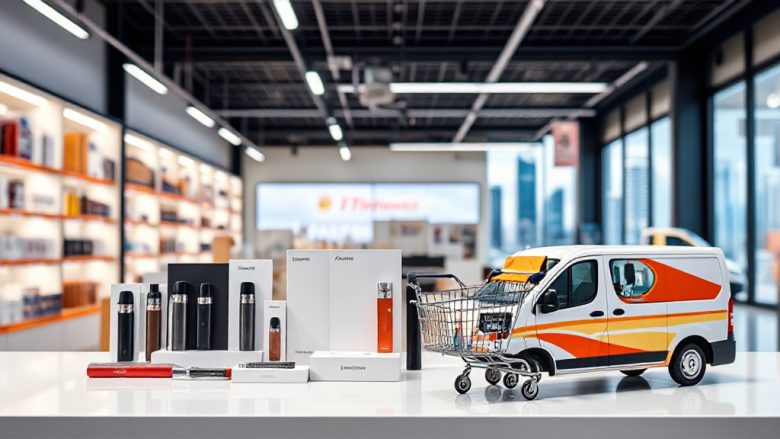
On a steel shelf in a climate-controlled warehouse somewhere in Singapore, a Lana Pen Plus 9K sits in its sealed box, label facing outward, waiting. It has no idea it is about to become someone’s Friday evening delivery. But behind that single unit is a chain of decisions — sourcing, listing, pricing, inventory rotation, picking, packing, courier handoff — that turned a factory carton into a product page you can tap on your phone. Understanding that chain is useful, because the same mechanics apply whether you are looking at a snowwolf 16k or any other device on a Singapore vape store. This is the story of how a listing actually works, told from the shelf outward.
Sourcing and Listing: How a Product Earns Its Place on the Page
Every listing begins long before it appears online. A retail buyer evaluates a device on puff count, battery capacity, flavour range, leak resistance, packaging quality, and — critically for Singapore — whether the supplier can provide consistent batches. The Lana Pen Plus 9K earns its spot because it sits in a popular middle tier: more capacity than a basic pen, less bulk than a high-output disposable. The buyer checks samples, verifies authenticity markers, and confirms the supplier can restock on a predictable schedule. Only then does the product get a green light.
Listing itself is a small project. Someone writes the product title, describes the draw, notes the puff rating, and uploads images that show the actual device rather than a stock render. Categories get assigned so the item appears in the right collections. Related products get linked — a shopper browsing a lana pen plus 9k may also see a lana pix 20k or a marbo 25k suggested alongside it. That cross-linking is not decoration; it is how a store helps a buyer compare formats without leaving the site. Once the page goes live, the product stops being a warehouse item and becomes a promise: this is what you get, this is what it costs, this is when it arrives.
Pricing Logic: Why the Number on the Page Is What It Is
Shoppers often assume the price is simply cost plus a markup. In practice, a disposable vape listing is priced through several layers. First comes landed cost — the unit price, freight, duties, and any handling fees. Then comes the operational layer: warehousing, cold-chain-free but climate-controlled storage, pick-and-pack labour, and the courier rate for a small parcel. Then comes the market layer: what comparable devices sell for, how fast the item moves, and whether the store wants it to be a volume driver or a margin item.
Singapore adds its own wrinkles. Delivery is usually local and fast, which keeps courier costs predictable but demands tight inventory. Cash on delivery is common, which means the store carries the risk of a refused parcel and prices that risk into the model. A listing like the Lana Pen Plus 9K is therefore priced to survive a small percentage of returns without becoming unattractive. That is why two stores can list the same device at different prices — they are not selling the same bundle of costs. When you see a lana pix or a lana ultra 2 at a particular figure, you are seeing a compressed summary of sourcing, logistics, and risk.
Inventory Management: Keeping the Shelf From Going Empty
Inventory is where retail quietly succeeds or fails. A warehouse does not simply store boxes; it rotates them. Newer stock goes behind older stock so the oldest units ship first. Each batch gets a reference code so that if a supplier issue appears, the store can trace which orders are affected. Reorder points are set per SKU: when the Lana Pen Plus 9K drops below a threshold, a purchase order goes out. If demand spikes — say, after a popular flavour review — the threshold triggers earlier.
This matters to the shopper because it determines whether a listing says “in stock” or “sold out.” A well-run store would rather show a temporary out-of-stock than ship a substitute the customer did not choose. The same discipline applies across the catalogue: a marbo vape 25k and a terea singapore line each have their own velocity, their own reorder rhythm, and their own shelf space. The goal is not to have everything at once; it is to have the right things at the right time without tying up cash in slow movers.
Order Processing: From Click to Pick List
When an order lands, the store’s system does several things in sequence. It confirms the item is reserved, assigns an order number, and generates a pick list for the warehouse. A picker walks the aisles with that list, scans the barcode on the Lana Pen Plus 9K box, and places it in a tote. Scanning is the quiet hero here: it prevents the wrong flavour or wrong puff count from being pulled. If the scan does not match the order, the system flags it immediately.
Payment method affects the flow. Prepaid orders move straight to packing. Cash-on-delivery orders are flagged so the courier knows to collect on arrival. Address verification happens at this stage too — a mistyped postal code can delay a parcel by a day, so good stores catch it before the courier is booked. The whole processing window is usually short, but it is not instant. Someone has to confirm, pick, and stage the order before it becomes a parcel.
Packing and Courier Handoff: The Last Mile Begins
Packing is where retail meets discretion. Disposable vapes ship in plain outer packaging with no product branding visible on the box. Inside, the device is cushioned so it does not rattle or compress. For a Lana Pen Plus 9K, that means a snug fit that protects the mouthpiece and the battery. The packer seals the parcel, applies the shipping label, and moves it to the outbound area sorted by courier and route.
Courier handoff is a scheduled event. The store books a pickup, the courier scans the parcels into their network, and tracking goes live. From that moment, the parcel is no longer the store’s to control — but the store still watches. Delivery exceptions, failed attempts, and address issues get flagged back to customer service, which can contact the buyer before the parcel bounces. This is the part shoppers rarely see, and it is where a good store separates itself from a mediocre one. Fast delivery is not just a courier’s speed; it is the store’s ability to hand off cleanly and fix problems quickly.
Final Delivery and What It Means for the Buyer
The final step is the one you experience: a knock, a parcel, a plain box. The Lana Pen Plus 9K that sat on the shelf is now in your hand, and the chain that moved it — sourcing, listing, pricing, inventory, processing, packing, courier — has completed its loop. For the shopper, the practical takeaway is that a product page is not just a price and a photo. It is a snapshot of an operation. A store that keeps accurate stock counts, prices transparently, packs discreetly, and handles delivery exceptions is a store that will get your order right more often.
That is why it helps to buy from a retailer that treats the whole chain as one system. When you browse a listing, you are really evaluating the warehouse behind it. The device on the shelf is patient, but the process around it is not — and the better that process is run, the less you ever have to think about it.