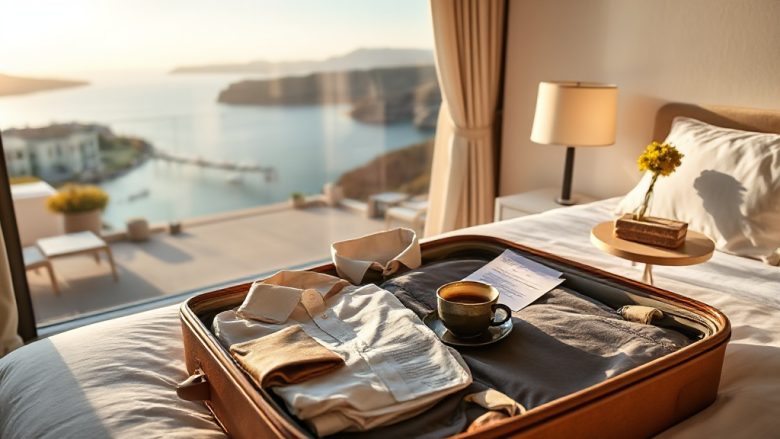
Affordable luxury is not about finding a cheaper version of everything. It is about paying full price for the two or three things you will actually remember, and quietly saving on the rest. That distinction matters, because most people who try to travel luxuriously on a budget end up with a trip that feels thin: a nice room in a dull location, a bargain flight that lands at 3am, a hotel breakfast that costs more than dinner. The better approach is to decide, before you book anything, which parts of the trip carry the memory and which parts are just logistics. Then spend accordingly.
These affordable luxury travel tips are built around trade-offs rather than tricks. None of them require a discount code, a loyalty scheme you do not have, or a willingness to sleep in an airport. They require planning, a little flexibility, and the discipline to say no to the parts of a trip that look impressive on paper but add nothing to the experience.
Choose the Right Season and Dates Before You Choose Anything Else
Timing is the single biggest lever on price, and it is the one most travellers ignore until the end. The same suite, the same restaurant, the same stretch of coastline can cost twice as much in the first week of August as it does in the last week of September. If your dates are fixed by school holidays or work, you have less room to move, but you still have options: shifting a trip by three or four days, or choosing a destination where the peak season falls at a different time, can change the whole budget.
Think in terms of shoulder season rather than low season. Low season often means closed restaurants, unreliable weather, and a resort running on a skeleton staff. Shoulder season is the sweet spot: the place is fully open, the light is good, and the crowds have thinned enough that you get the version of the destination that people actually rave about. Late spring and early autumn are the obvious windows in Europe, but the principle works everywhere. In tropical regions, the edge of the rainy season often delivers lower rates with only an hour or two of afternoon rain.
Midweek arrivals matter too. Friday and Sunday flights carry a premium that rarely reflects a better experience. A Tuesday departure and a Thursday return can save enough to fund a genuinely special dinner, and the airport will be calmer. If you are booking a hotel for a week, ask whether the rate changes across the stay. Sometimes a single expensive Saturday night sits in the middle of an otherwise reasonable week, and shifting the whole trip by a day removes it.
One more thing: avoid booking around major events you do not care about. A city hosting a marathon, a trade fair, or a music festival will price everything upward for a week, and you will spend your evenings navigating crowds you did not come to see. Check the local calendar before you commit.
Where to Spend and Where to Save: The Two-List Method
Before booking, write two lists. The first is what you will remember in five years. The second is what you will forget by the time you get home. Be honest. For most people, the memory list includes the view from the room, one or two exceptional meals, a private guide or a boat trip, and the feeling of not being rushed. The forget list usually includes the flight, the airport transfer, the hotel gym, the minibar, and the branded toiletries.
Spend on the memory list. That means paying for the room with the view rather than the room with the extra square metres. It means booking the restaurant you have read about rather than three mediocre dinners. It means hiring the guide who can get you into the place that does not take walk-ins. These are the line items that justify the trip.
Save on the forget list without apology. Fly in economy on a daytime flight and use the money for the hotel. Take public transport or a shared transfer from the airport instead of a private car, especially in cities with reliable rail links. Skip the hotel breakfast and eat where locals eat, which is usually better and a fraction of the price. Decline the upsell at check-in unless it genuinely changes the room. None of this feels like sacrifice, because none of it is the reason you went.
The trick is to be deliberate rather than uniformly cheap. A trip where everything is budget feels like a budget trip, no matter how clever the savings. A trip where two or three things are genuinely excellent and the rest is simply sensible feels expensive. That contrast is what affordable luxury actually is.
Booking Tactics That Protect the Experience
How you book matters as much as what you book. The goal is to secure the good version of the trip without paying the walk-up price for it.
Book the anchor first. Decide which element is non-negotiable, whether that is a specific hotel, a particular restaurant, or a date that cannot move, and lock it in early. Everything else flexes around it. This prevents the common mistake of building a trip around a cheap flight and then discovering that the hotel you wanted is full or triple the price on those dates.
Contact hotels directly for anything longer than two nights. A short, polite message asking about the best available rate for your dates, or whether a quieter room is available, often produces a better outcome than any booking platform. Hotels have flexibility that platforms do not, and they would rather fill a room at a fair rate than pay commission. Ask about included breakfast, late checkout, or a room upgrade as part of the rate rather than as a separate purchase.
Use free cancellation rates even when they cost slightly more. They give you the option to rebook if prices drop or plans change, and they remove the pressure to commit before you have finished planning. Set a calendar reminder for the cancellation deadline so you do not lose the flexibility you paid for.
Be flexible about the property, not the location. A four-star hotel in the right neighbourhood will almost always beat a five-star hotel in the wrong one. Location determines how you spend your days, how much you spend on transport, and whether the trip feels effortless. If the budget is tight, trade a star for a better address.
Finally, book directly with restaurants and experiences where you can. A phone call or a short message often secures a table that the online system shows as unavailable, and it costs nothing to ask.
Small Upgrades That Feel Expensive
Luxury is often a matter of detail rather than scale. A few small, well-chosen additions can make an ordinary trip feel considered, and they usually cost far less than a category upgrade.
Arrive early and ask for the best room available at check-in. If the hotel is not full, a polite request at the desk frequently results in a better room at no extra cost. The same applies to restaurant tables: the table by the window is often unassigned until the last moment, and asking nicely is free.
Pay for one genuinely special experience rather than several ordinary ones. A single long lunch at a celebrated restaurant, a private tour with someone who knows the place deeply, or a night in a room with a view you will remember is worth more than a week of small treats. Concentrate the budget where it shows.
Pack for the trip you want to have. A pressed shirt, a decent pair of shoes, and a small amount of planning around what you will wear to dinner cost nothing extra and change how you feel in a nice room. The experience of a beautiful hotel is partly about feeling you belong there.
Use the quiet hours. Early mornings and late afternoons are when the best places are at their best and the crowds are elsewhere. A coffee on a terrace at 7am, or a walk through a museum in the last hour before closing, feels more exclusive than any paid upgrade and costs nothing.
Bring one small luxury with you. Good coffee, a favourite book, a proper toiletry bag. These details make a standard room feel like your room, and they travel with you regardless of what you paid.
Making the Trade-Offs Work for You
The thread running through all of this is choice. Affordable luxury is not a discount strategy; it is a way of deciding what matters and refusing to spend on what does not. The traveller who pays full price for the room with the view, flies at an awkward hour to afford it, and eats breakfast at the corner cafe is not compromising. They are editing.
That editing process gets easier with practice. Start by naming the two or three things you want to remember, protect them in the budget, and let everything else be practical. You will likely find that the trip feels more expensive than it was, because the parts you notice are the parts you paid for. The rest fades into the background, which is exactly where it belongs.
Plan the anchor, choose the shoulder, spend where the memory lives, and save without guilt everywhere else. Done consistently, those habits turn a mid-range budget into a trip that feels like a splurge, and you will come home with the sense that you spent well rather than simply spent less.